What you actually get.
Three parts, delivered together. Each one is ordinary on its own. Held together, they are the program.
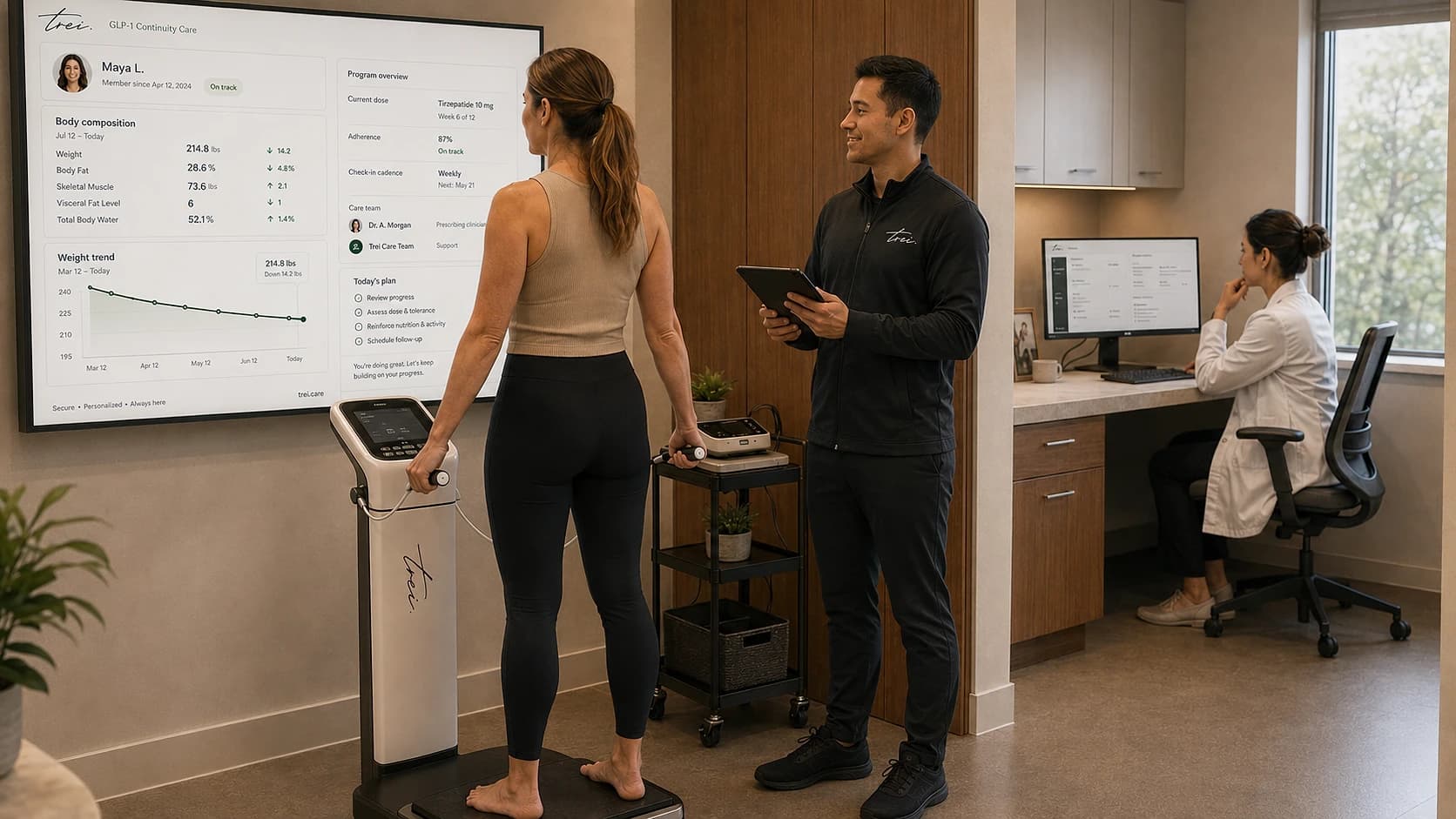
A real assessment, on a biometric station
Measure, interpret together, connect it to the last stretch, set the next focus.
A patient should not walk in, step on a scale, and walk out. Your first visit establishes an objective baseline on a station in the room: weight, body composition, and the markers your practitioner uses. Every return visit repeats the same four steps, so the number always arrives with context.
- Body fat, skeletal muscle, visceral fat, and total body water, not weight alone.
- Built around a biometric protocol, so a practice can start with equipment it already owns.
- Small enough to run inside an existing room and an existing workflow.
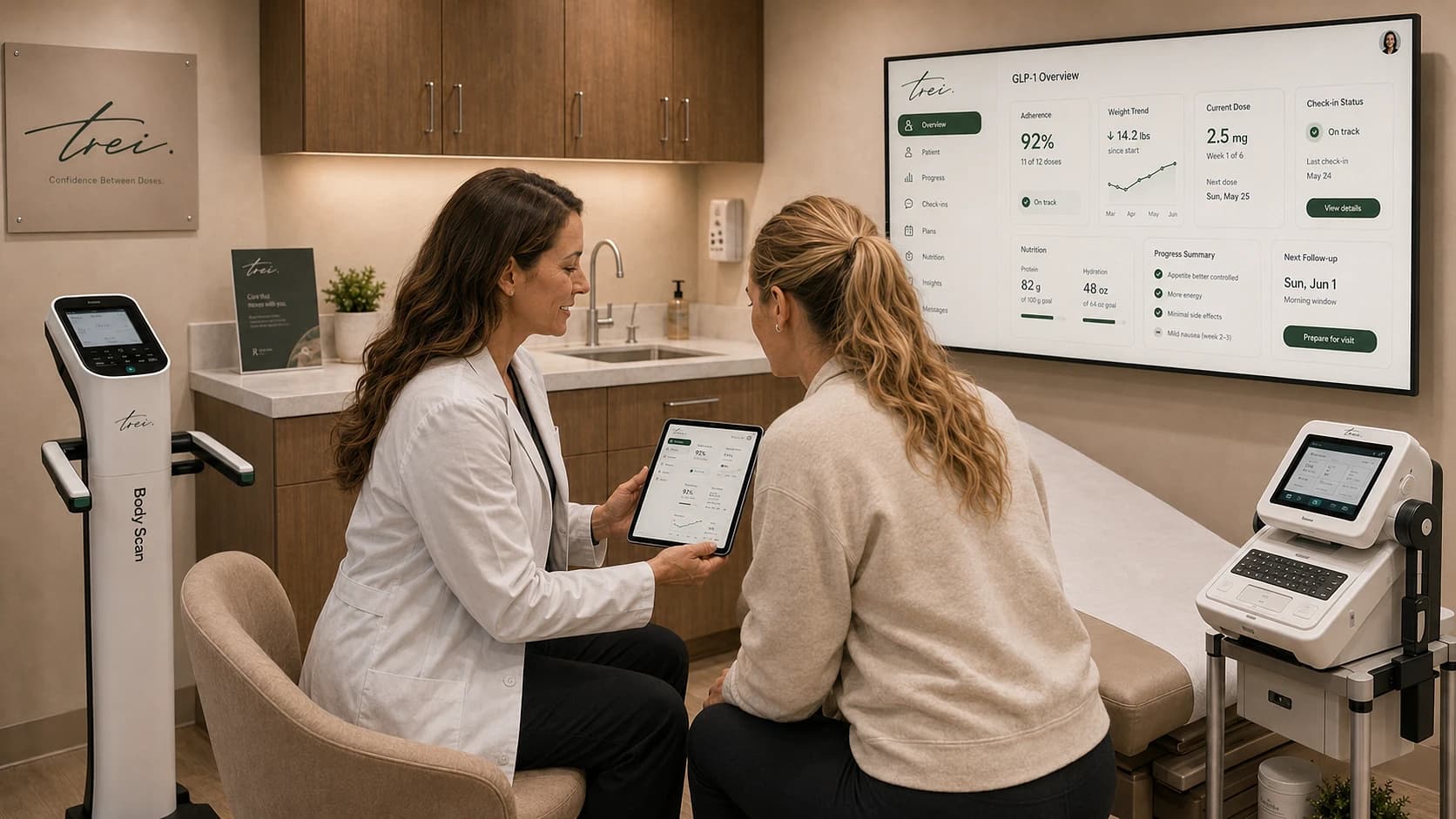
A trained member of your care team
Generally someone already on your practice's staff, certified on the trei protocol: enrollment, assessment, education, and exactly when to hand something back to the practitioner. Not a remote coaching army, and never a stranger in a call center.
- Runs your enrollment and baseline, and stays your point of contact.
- Answers what they can, and routes anything clinical to your practitioner.
- Already part of the practice you chose.
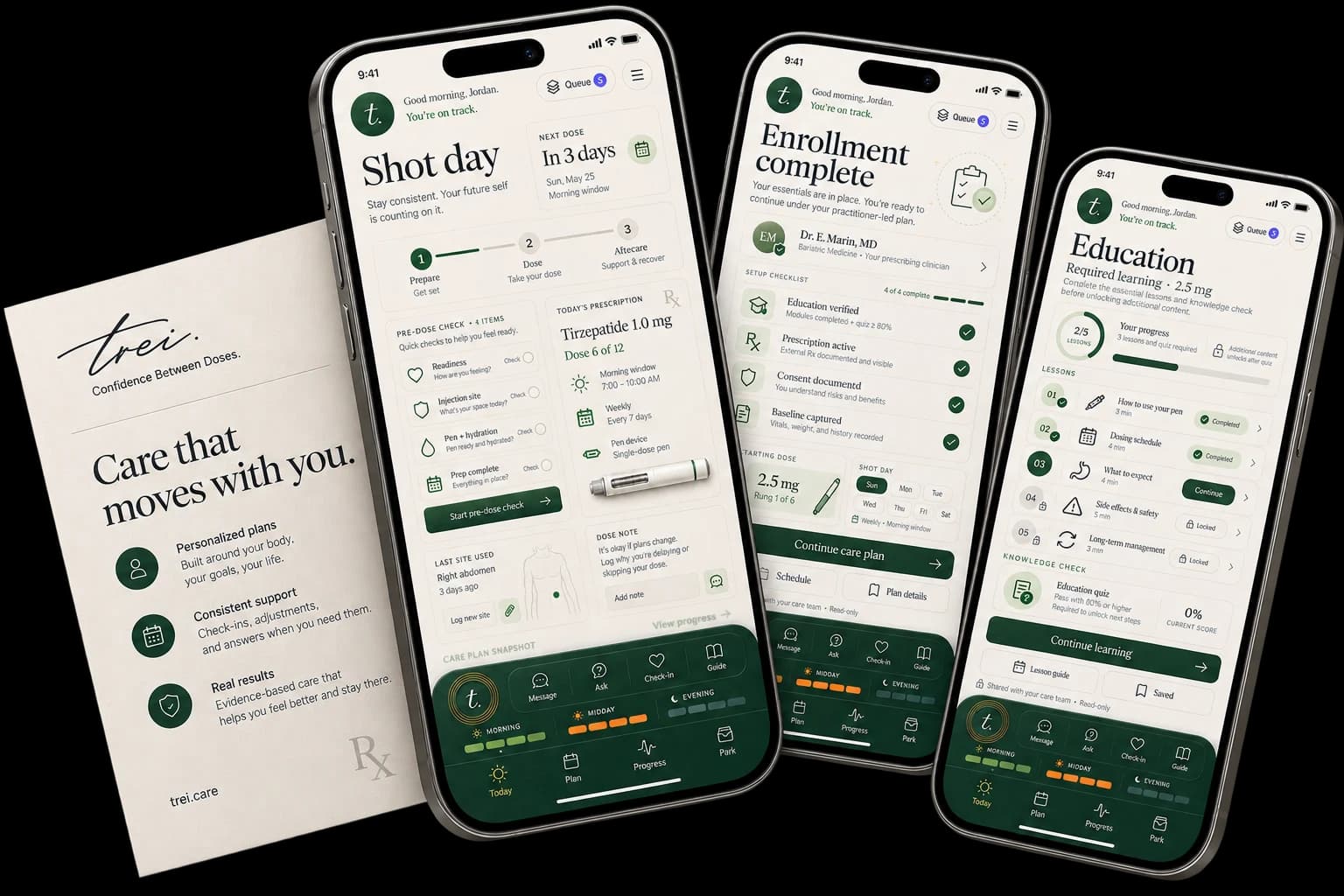
Continuity that survives the weeks in between
Treatment events, tolerability, appetite and hydration context, and education timed to your dose stage. It is available on your phone or in a browser, and it exists for one reason: so the next visit starts from something real rather than from memory.
- Nausea and constipation tracked separately, never blended into one score.
- Education that unlocks at your dose stage instead of all at once.
- A pre-visit summary that reaches your practice before you do.
Three rules the program is built on.
- 01
Technology carries the relationship. It does not replace the relationship.
- 02
Optimize for the next human encounter, not for time spent on a screen.
- 03
Capture only enough context to make the next visit useful, and keep the workflow realistic for the team that already exists.
What trei records. What only your practitioner decides.
trei records
- Treatment events and tolerability
- Behavior and routine context
- Objective assessment history
- A pre-visit summary for your practice
Your practitioner decides
- Whether anything about your treatment changes
- How to interpret a concerning symptom
- Your dose and prescription
- Any clinical decision, always